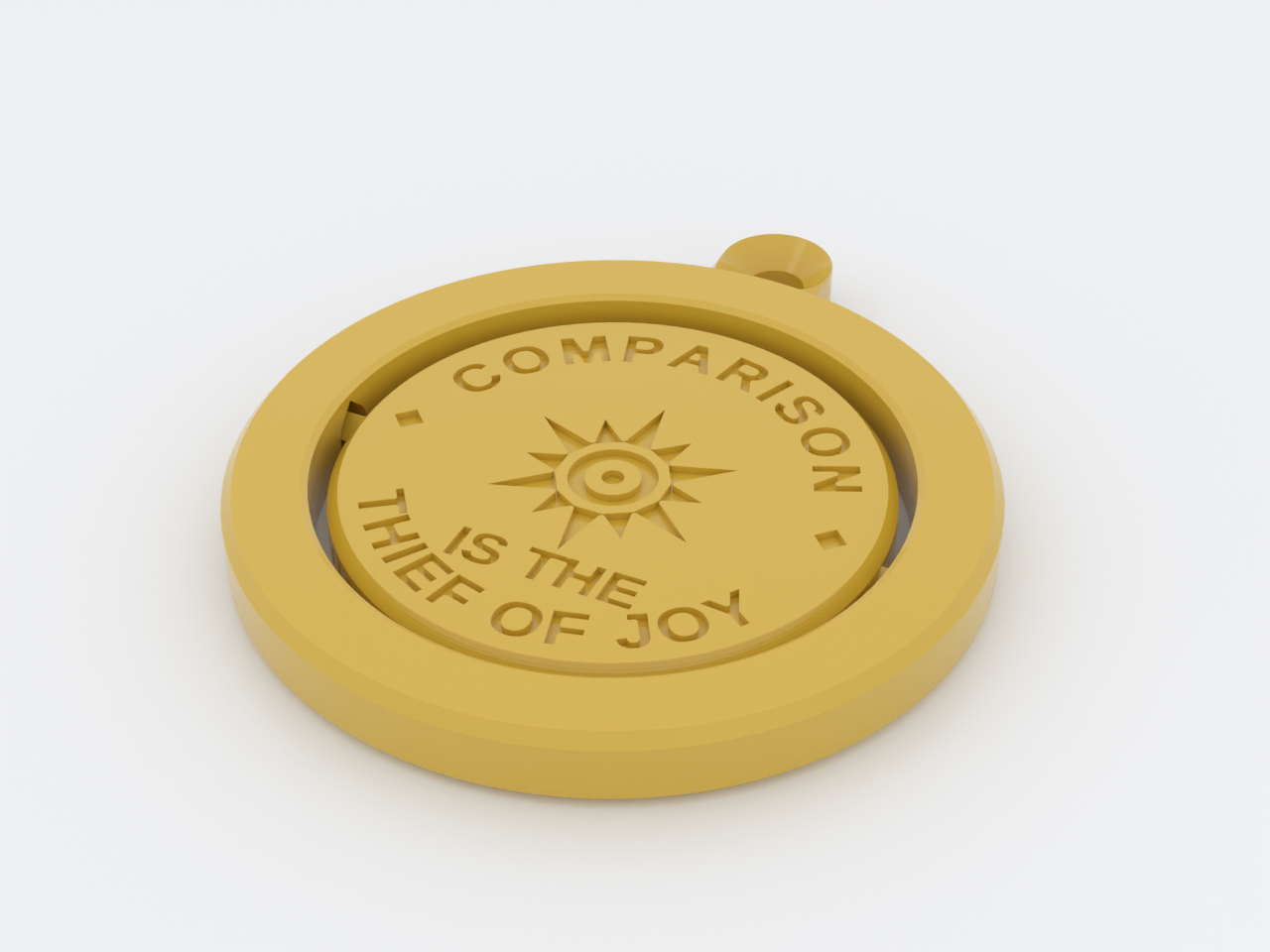
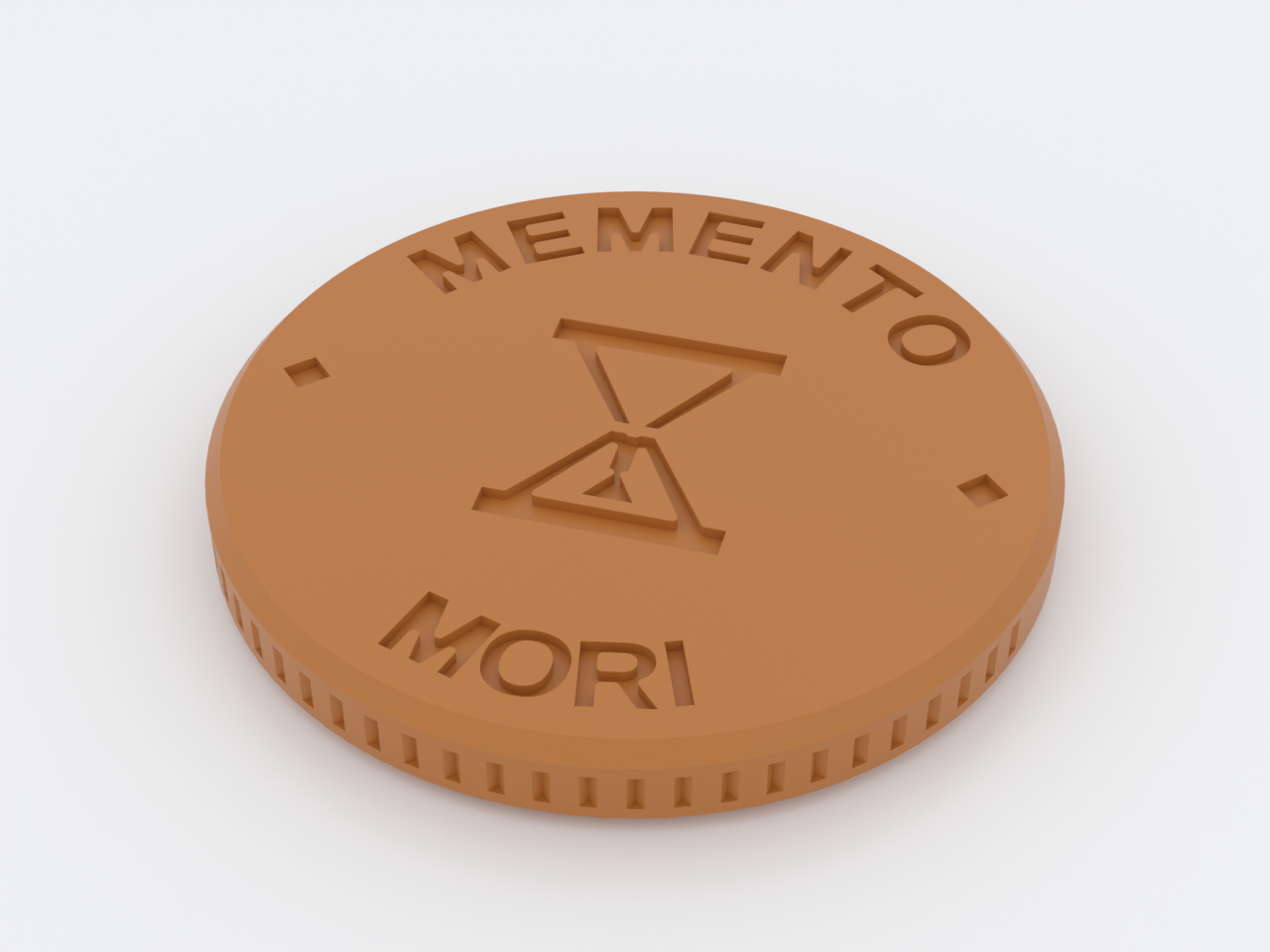
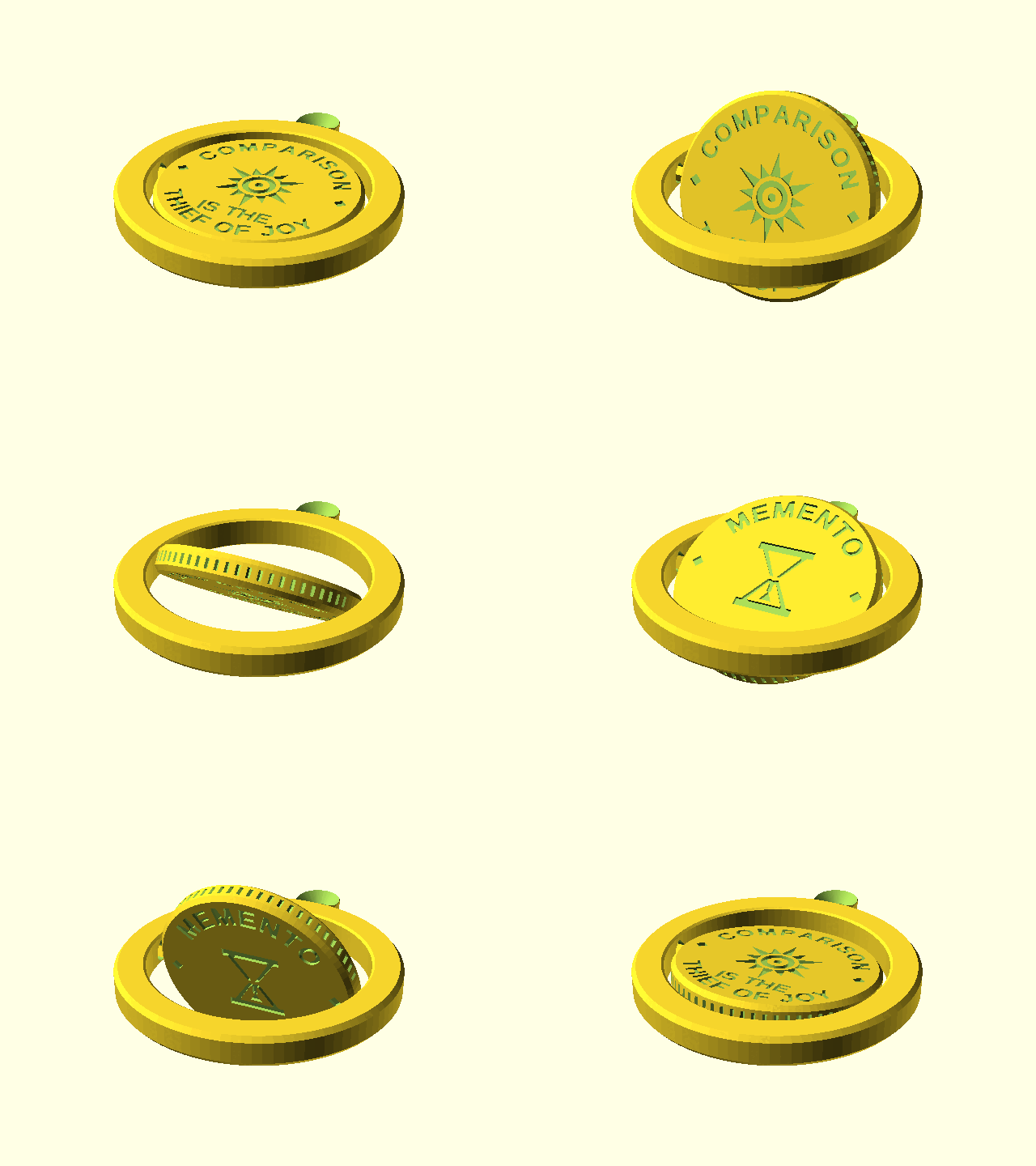
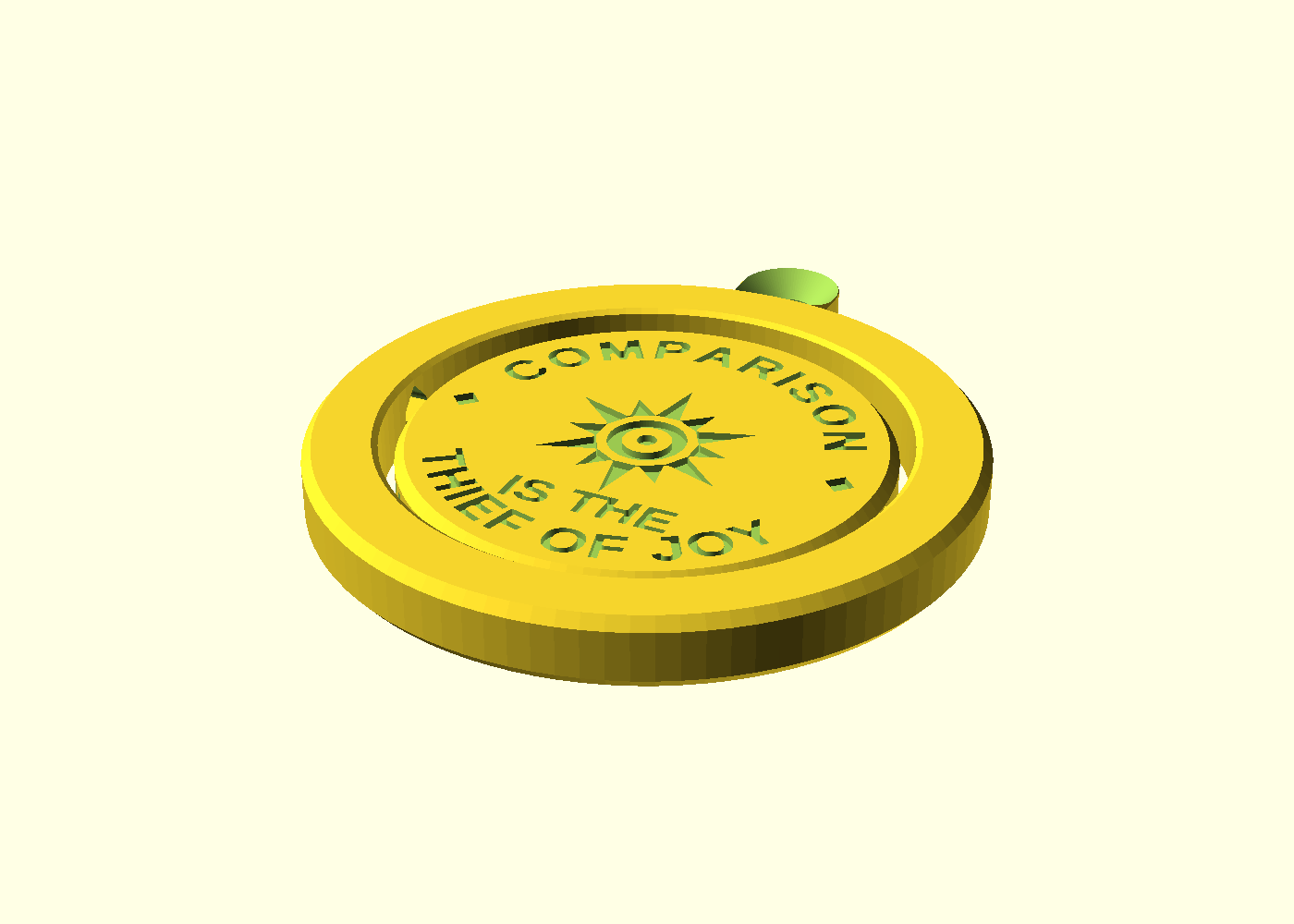

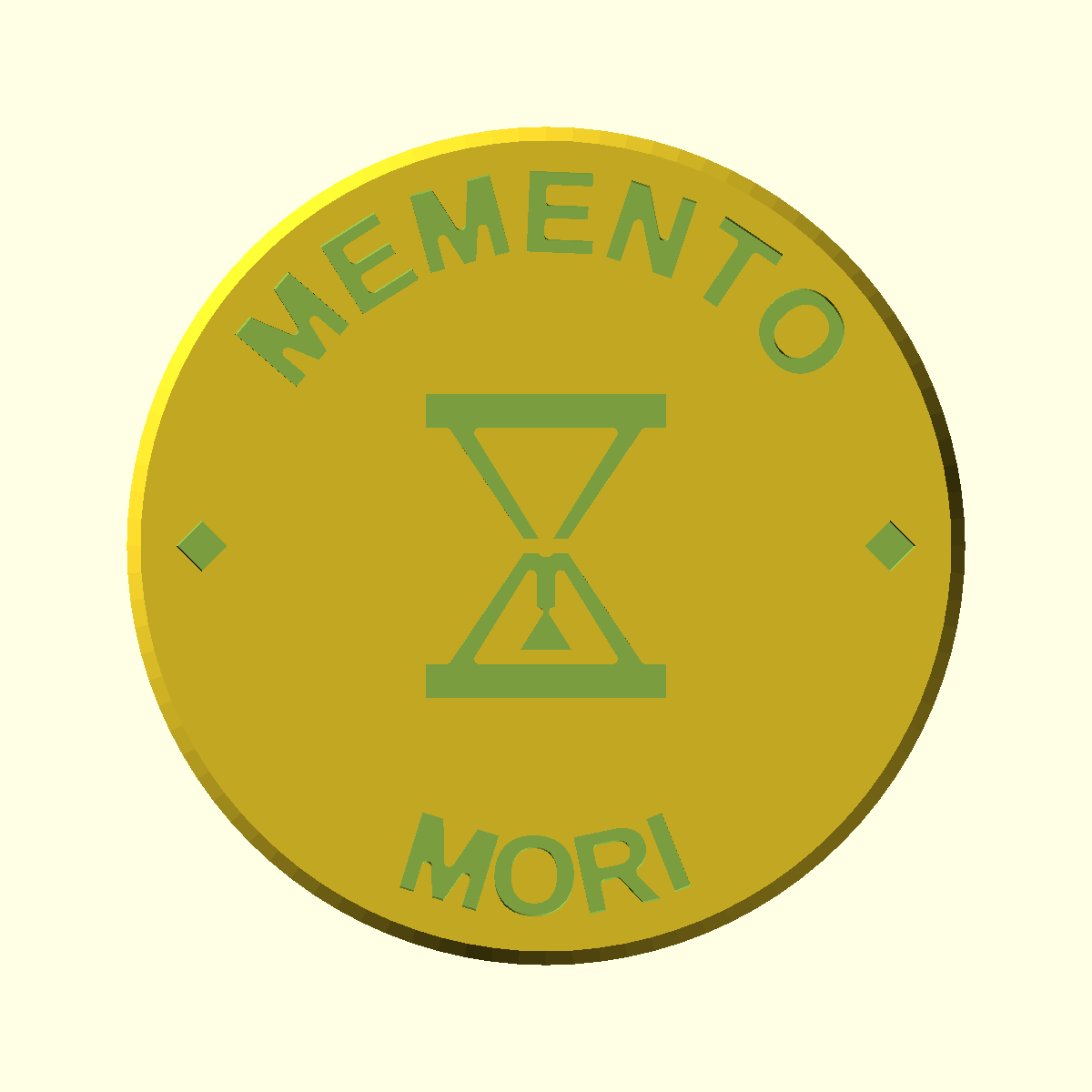
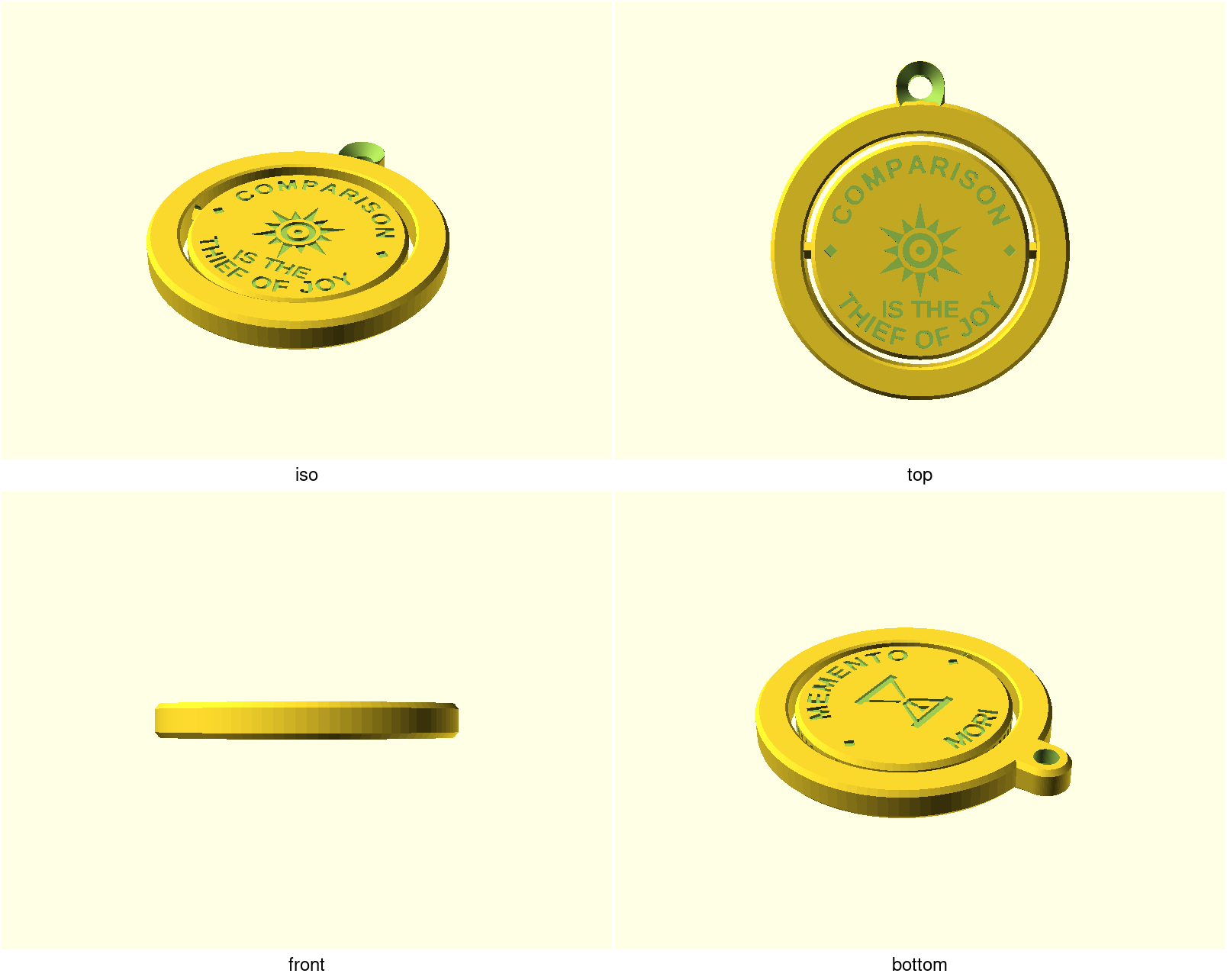
A two-sided pocket coin of the two engravings John Cena keeps on his watch (as he tells it in an interview clip shared on Reddit) — "COMPARISON IS THE THIEF OF JOY" around a radiant sun on one face, for the days you don't feel like enough, and "MEMENTO MORI" around an hourglass on the other, for the days your head gets too big. Print the bare coin for your pocket, or the flipper: a print-in-place keyring gimbal that holds the coin on two tiny axles, so you flip it — literally — to the reminder you need. A keeper of perspective, not time.
What you get
flipper(default) — the coin captured in a keyring ring, printed as one piece: ~Ø54 × 6 mm plus the loop. No assembly; flip it firmly once to free the pivot.coin— the bare two-sided coin, Ø40 × 5 mm, reeded edge, chamfered rims.perspective-coin-coupon— a 24 mm pivot-tuning flipper. Print this first.
| Face A | Face B |
|---|---|
 |  |
How the mechanism prints
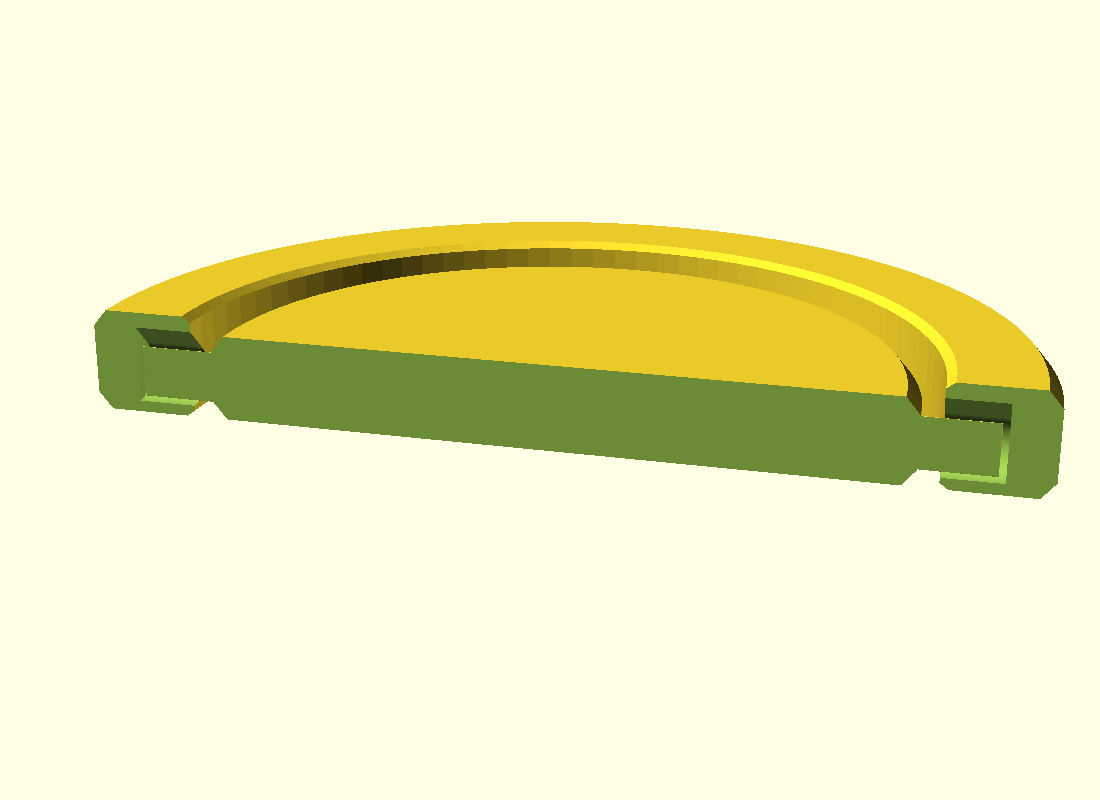
The coin carries two diamond-section stub axles (45° cross-section — its own overhang self-supports) that ride in teardrop sockets inside the ring, so the socket roof never bridges. A 1.2 mm moat separates coin from ring everywhere else; the only printed fusion is the thin axle/socket annulus, and the first firm flip shears it. The engraved faces are in coin-flip alignment about the pivot, so the back face reads upright after a flip.
Print settings
- Material: any rigid filament — PLA is the reference; gold silk PLA if
you want it to look the part. The fit is tuned on PLA; PETG usually runs a
touch tighter, so a PETG flipper tends to want
pivot_clearat the 0.40 coupon-ladder ceiling (see the coupon note below). - Layer height: 0.2 mm. Use a height that divides 0.6 (0.12 / 0.15 / 0.2 / 0.3) — the engravings are exactly three 0.2 mm layers, and a draft 0.24 / 0.28 profile quantizes their depth off that grid.
- Plate: a smooth plate shows the bed-side (MEMENTO) legend best — it is the first layer, and a textured sheet stipples it. Textured still prints legibly, just softer.
- Ironing: on for the top surface — it smooths the JOY legend field
(a big win on silk/metallic PLA). If the finest text (
IS THE) fills in, set the ironing type to Topmost surface only (or off): the default "Top surfaces" also irons the engraved floors and can soften the ~0.55 mm stems. - Seam: the default "nearest" stacks the ring seam in the tab junction and leaves a visible scar. Scarf (on Bambu) is the cleanest fix — on a clean Ø54 cylinder a scarf seam is near-invisible wherever it lands. To hide it behind the loop with a Rear/Back seam instead, rotate the part 180° on the plate first (loop toward the back): the loop is modeled at the front, so a Rear seam without that rotation lands the scar on the bare arc opposite it.
- Infill: 15–25 % (it's a coin — top it up to 100 % if you want the heft)
- Supports: none needed — teardrop sockets, 45° axles, top-side counterbore
- Orientation: as modeled, flat on the bed; the flipper prints in place
- Print order: the coupon first — tune the fit for your printer (see the coupon note below), then print the real thing
Two-color faces (optional, any single-extruder printer)
The engraving is 0.6 mm deep on each face, so a plain filament swap gives both legends a contrasting color with no model change. The layer numbers below assume the reference 0.2 mm layer height — the swap heights are what matter, so pause by Z height, not by layer index:
- Load your field color. Print to z = 0.6 mm (layer 3 at 0.2 mm), then swap to the legend color — the MEMENTO face's engraved voids fill with it.
- Print to z = 4.4 mm (
coin_t − engrave_depth; layer 22 at 0.2 mm), swap back to the field color. - The remaining engraving (the COMPARISON face's void floors) stays the legend color. Two manual swaps, both faces two-tone.
Both swap heights are multiples of 0.2 mm, so at 0.2 mm they fall exactly on
layer boundaries. z = 0.6 also divides 0.12 / 0.15 / 0.3 mm cleanly, but
z = 4.4 does not (e.g. 4.4 / 0.15 = 29.3) — at any non-0.2 mm height,
round the second swap to the nearest layer boundary at or above 4.4 mm. Scale
both heights if you change engrave_depth or coin_t.
Parameters
| Parameter | Default | What it does |
|---|---|---|
coin_d | 40 mm | Coin diameter (legend artwork is tuned to 40) |
coin_t | 5 mm | Coin thickness; the pivot axis sits at half of it |
pivot_clear | 0.35 mm | Radial fit: axle-to-socket clearance (across-axis rattle) — tune on the coupon |
socket_end_clear | 0.4 mm | Axial fit: end-play along the pivot (along-axis rattle) — tune on the coupon |
rim_gap | 1.2 mm | Moat between coin edge and ring bore |
loop_thick | 3 mm | Wrap thickness at the keyring hole (counterbored so a split ring threads easily) |
axle_r | 1.5 mm | Axle diamond vertex radius |
reed_n | 64 | Reeded-edge groove count (0 = smooth edge) |
engrave | true | Face engravings on/off |
loop | true | Keyring loop on the ring |
All parameters are at the top of perspective-coin.scad, grouped in
Customizer sections; override on the command line with -D 'coin_d=45'.
Assembly & use
None to assemble. When the flipper comes off the bed the coin is lightly fused to its sockets — hold the ring and flip the coin firmly once; after that it swings freely. Ego inflating? Flip to the hourglass. Comparing yourself into the ground? Flip to the sun: you are enough. The two engraved diamonds at 3 and 9 o'clock mark the pivot so you always know where to push.
The coin has no detent — whichever face is up when you pull your keys out is whatever the last jostle left. That is on purpose: the coin picks your reminder, and half the time it picks the one you weren't looking for.
Threading it onto a keyring: the loop is counterbored to a ~3 mm wrap at the
hole, so a standard split ring is meant to climb over just that ~3 mm, not the
full ring. (The counterbore is new in v0.2 and not yet field-threaded.) If the
pivot is stiff or sloppy, reprint the coupon: raise pivot_clear if it
won't break free, lower pivot_clear for across-axis wobble, lower
socket_end_clear for along-axis end-play — then carry the value into the
full-size print. The same two knobs fix wear: if the pivot goes loose after
months of carry, lower pivot_clear / socket_end_clear and reprint.