

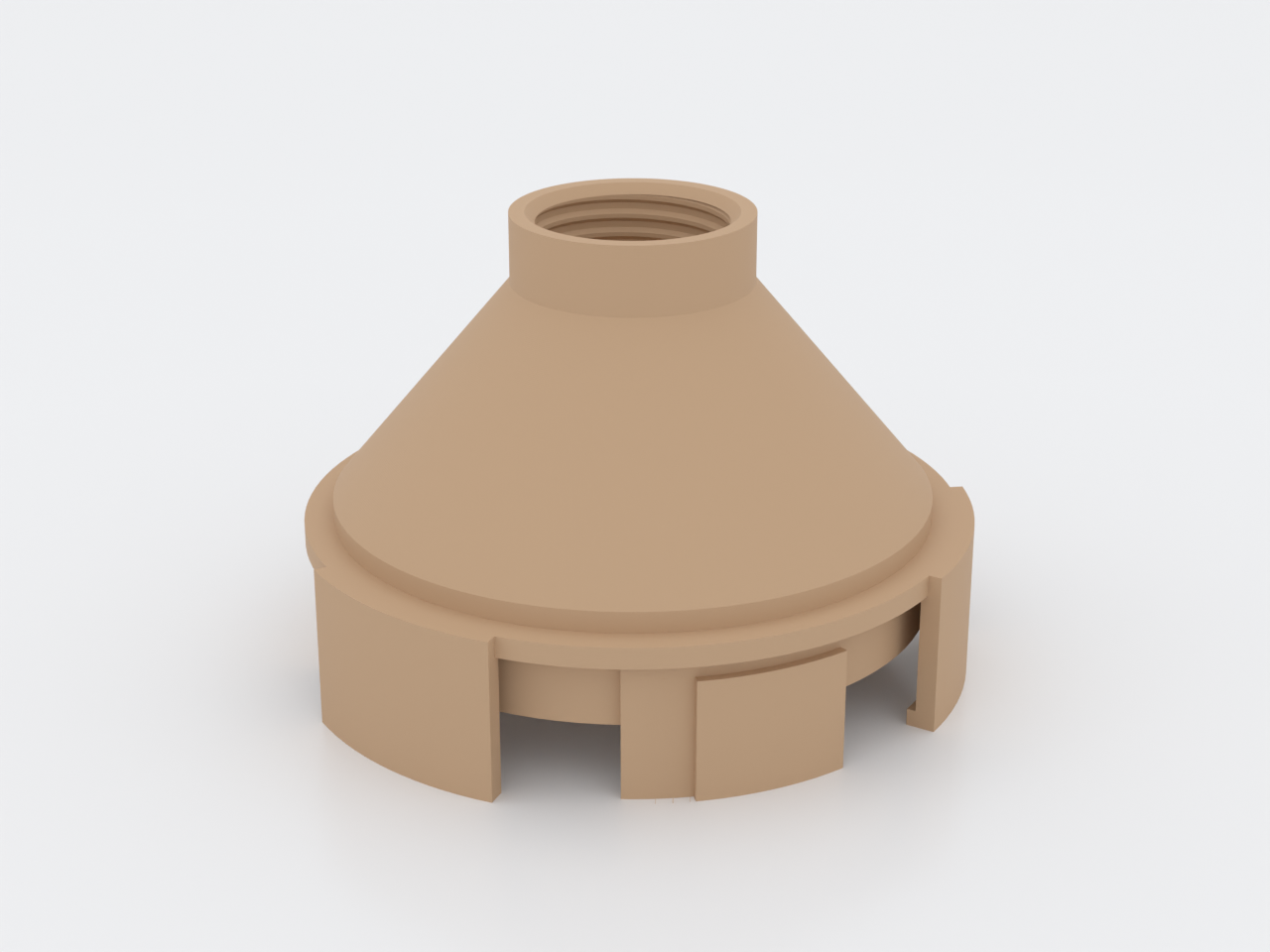
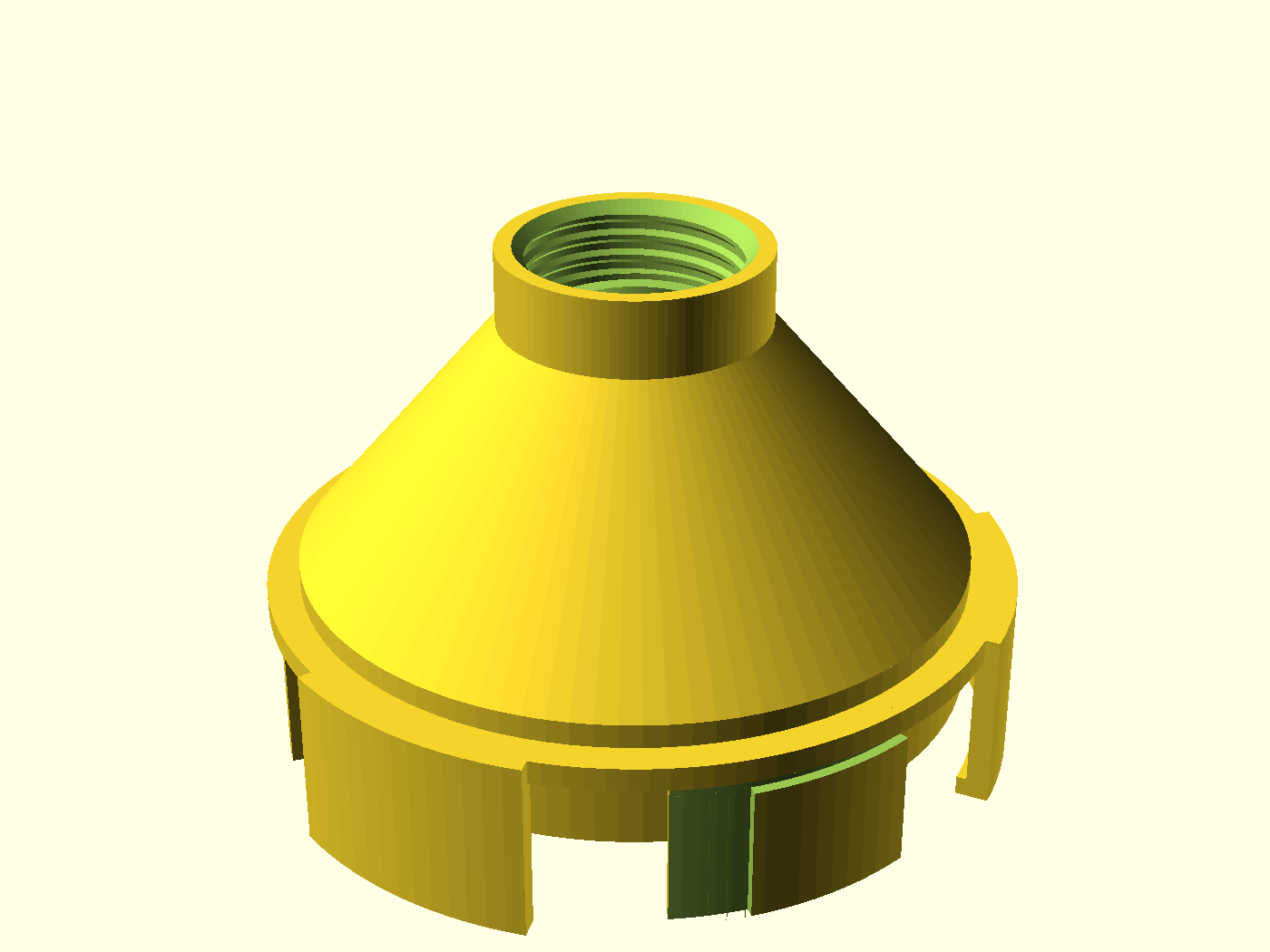
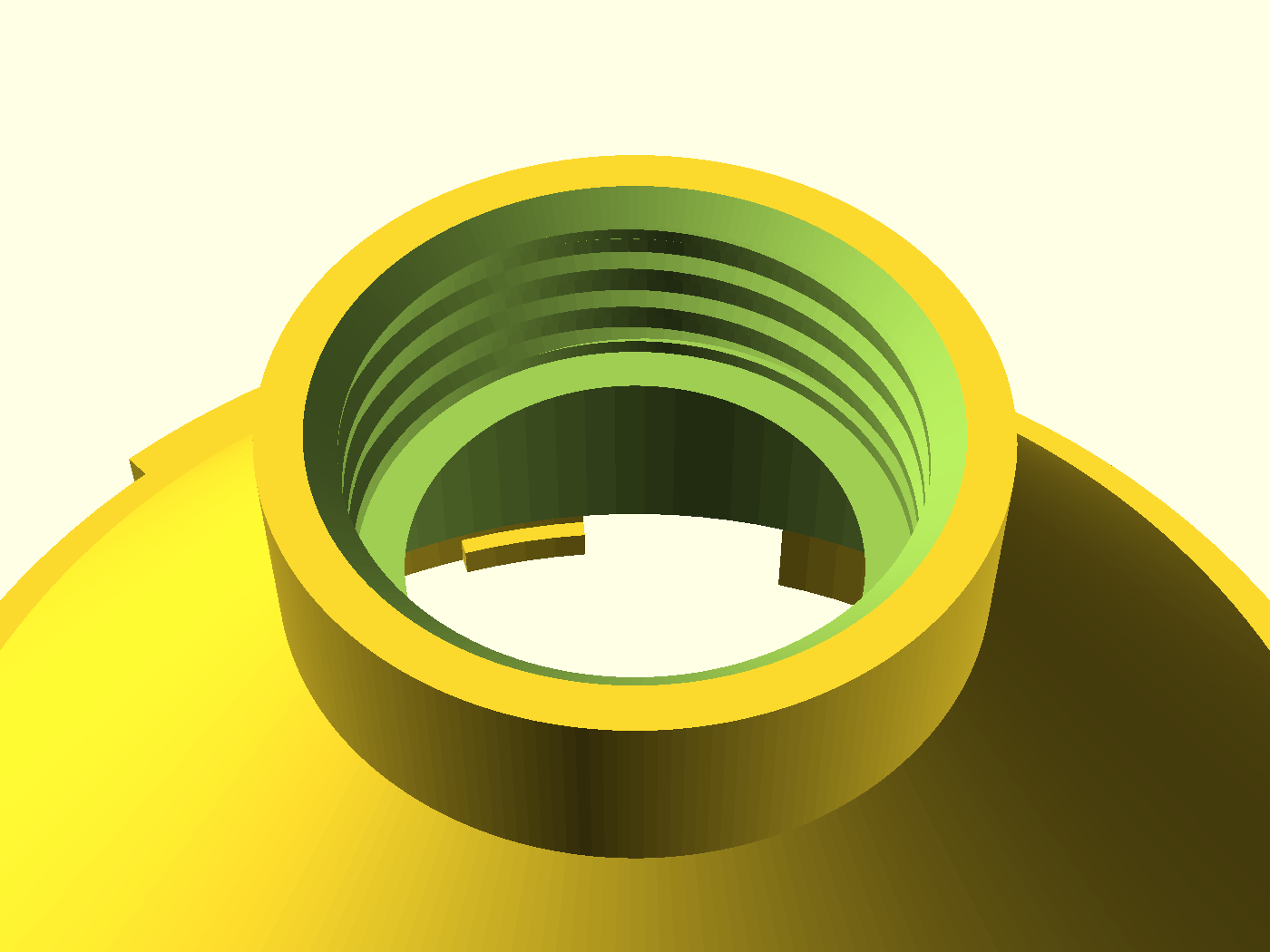
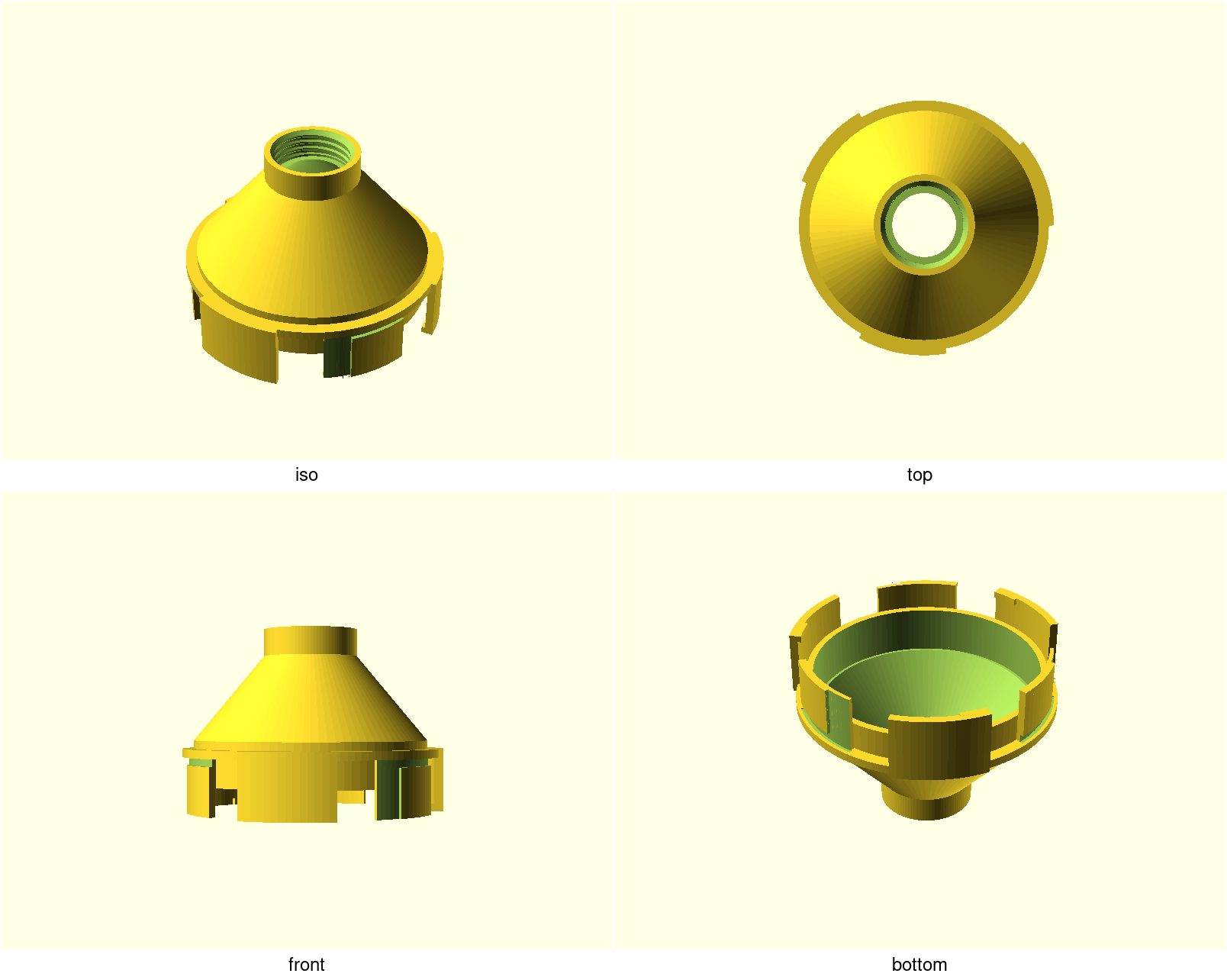
Turn a PCO-1881 soda/water bottle into a drop-in module of a N.U.G.G.S.
hamster habitat: this one printed part screws onto that standard neck finish
and plugs into the genderless quarter-turn NUGGS port — no special bottles,
no fasteners, no tools. It does not seal on its own; it passes what the
bottle's orifice passes, so treat it as a dispenser, not a watertight
waterer — pair with nuggs-shutter-valve when you need to gate flow. Swap
bottles in seconds; wash and refill the bottle, not the habitat plumbing.
What you get
adapter— the one-part bottle-to-NUGGS adapter (approx. Ø97 × 66 mm): the coupling port below, a PCO-1881 threaded throat above.coupon— the print-this-first fit checker: the port stub plus four labelled thread rings to find your printer'sbottle_tolbefore you commit to the body (approx. 187 × 97 × 31 mm).
Which bottles fit: PCO-1881 is the standard Coke/Pepsi soda neck — not every "water bottle" uses it. Before you commit filament: if the cap from a Coke bottle fits yours, or the neck measures about 28 mm inside, you're on PCO-1881; when unsure, the coupon is the proof.
Print settings
- Material: PLA (dry service) or PETG if you hand-wash warm — family N7 still applies; see Use & care
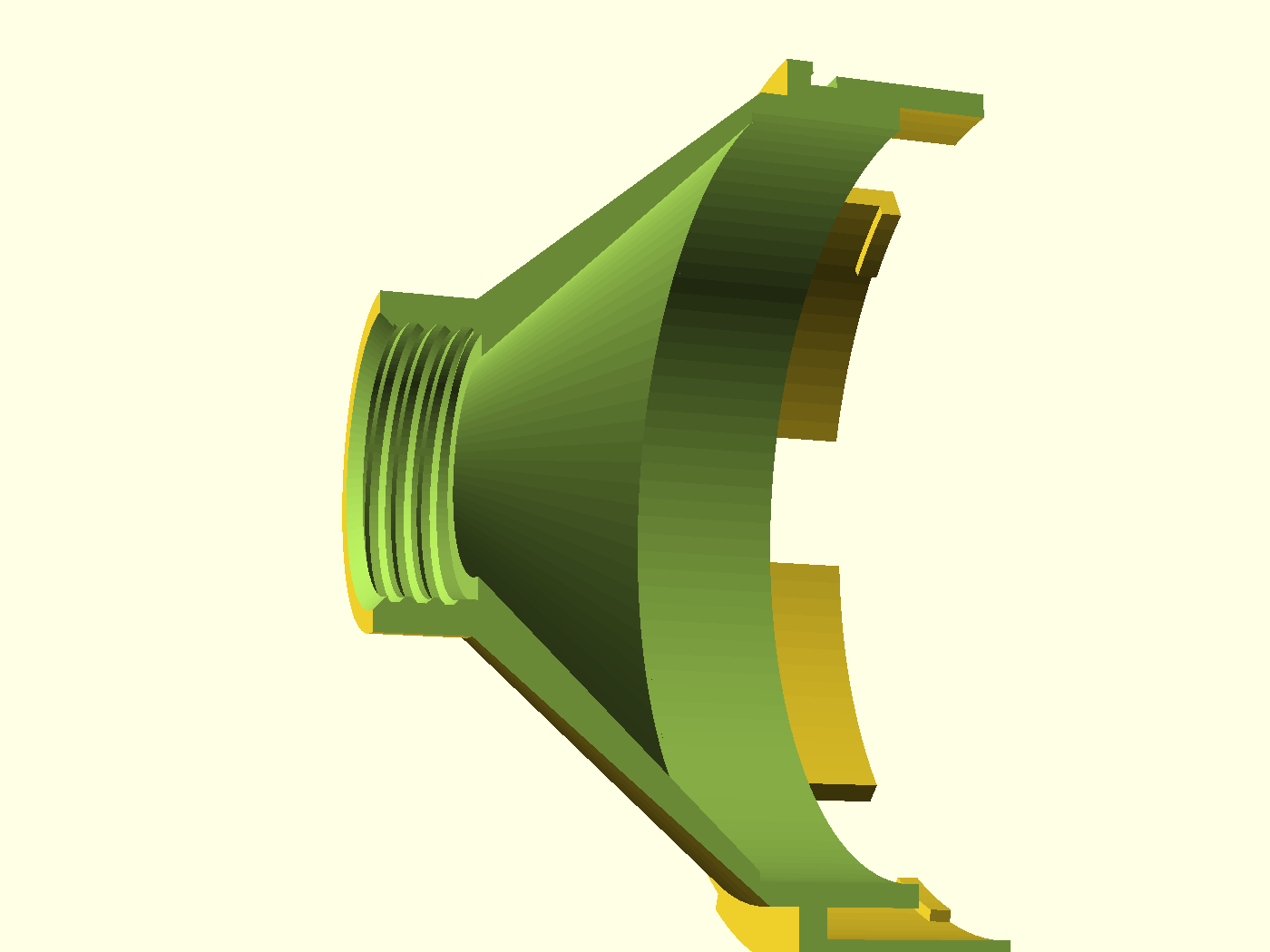
- Layer height: 0.2 mm with a 0.4 mm nozzle — the thread ridges are 3 layers wide; coarser loses the thread
- Infill: 15% (all working surfaces are perimeters)
- Supports: none needed — steepest surface is the 44° interior funnel
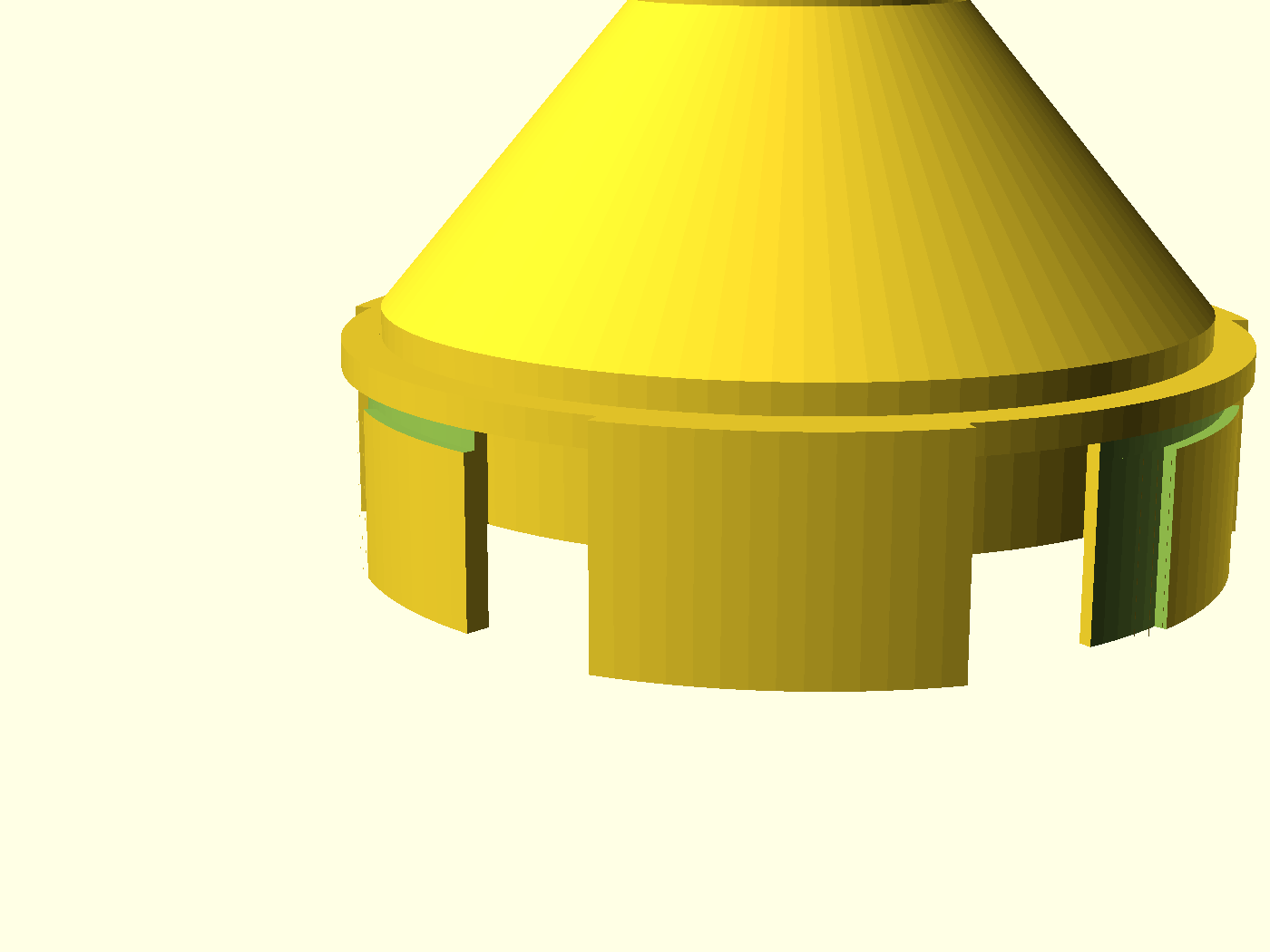
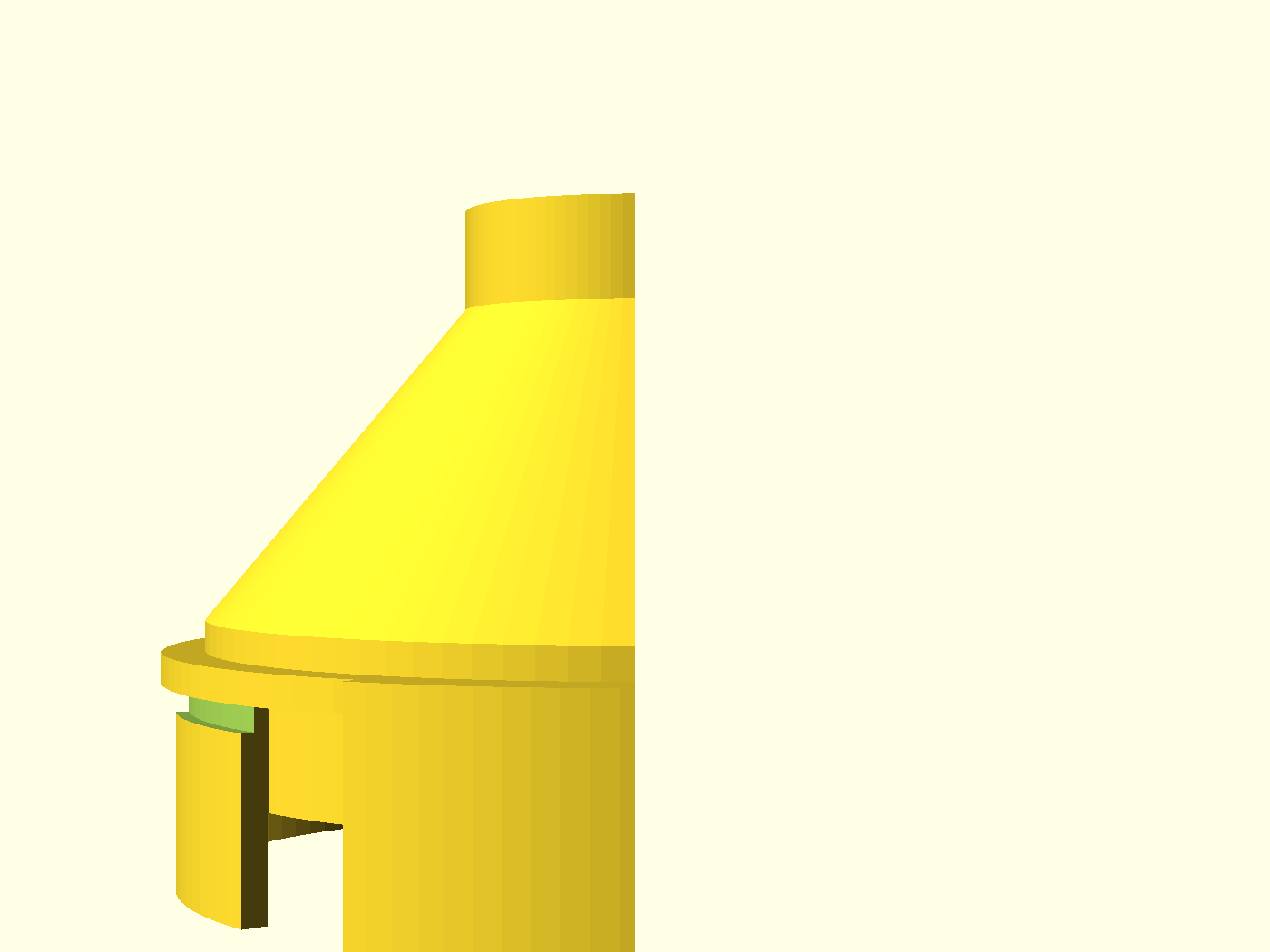
- Orientation: as rendered, port down on the coupling sector tips
- Seam: random (or rear) — an aligned seam stacks a ridge inside the threaded bore that can catch the bottle at one spot in the turn
- First layers: the sector tips print as separate islands and merge into the ring a few layers up — normal for the NUGGS family pose; keep supports off anyway
- PETG note: expect some droop on the 44° funnel ceiling — cosmetic only, the flow path is set by the land opening
- Print first: the coupon, and set
bottle_tolfrom the ring that grips a real bottle best (see below). The coupon being heavier and slower than the adapter body is intentional: a full throat rehearsal (port stub + bottle rings), not a bug to "fix" (~4 h 57 m / 62.55 g vs the adapter's ~4 h 10 m / 53.16 g)
Parameters
| Parameter | Default | What it does |
|---|---|---|
bottle_tol | 0.25 mm | Thread clearance — the tuning knob; sweep it on the coupon (0.15–0.38) and set what grips |
f_thread_depth | 0.6 mm | Female thread depth; capped near 0.85 by the printable-profile fit inside one pitch |
nuggs_port_tol | 0.30 mm | Coupling clearance (the NUGGS standard default) |
land_opening_d | 22.0 mm | Hole in the sealing floor; never below the bottle's own 21.74 mm orifice |
funnel_deg | 44° | Interior funnel ceiling; keep ≤45° for supportless printing |
shell_h | 16 mm | Full-round wall behind the coupling face |
The PCO-1881 table (bottle_thread_od, bottle_thread_pitch, …) is the
standard, not knobs — don't tune those; tune the clearance. All parameters
are at the top of nuggs-bottle-adapter.scad in Customizer sections;
override on the command line with -D 'bottle_tol=0.22'.
Assembly & use
- Print and check the coupon first: screw a washed PCO-1881 bottle into
each labelled ring and find the tol that grips without cracking or
skipping; put that number in
bottle_toland print the adapter. - Screw the bottle into the adapter mouth-down until its lip seats on the land (about 1.8 turns from first contact). The bottle's weight rests on the printed land — the thread only keeps it from unscrewing. Any rotational "label clock" for which way the bottle brand faces the room is fine mechanically; there is no preferred orientation.
- Quarter-turn the coupling into any NUGGS port, the same as every module.
- If the bottle bottoms out before seating (you feel the tamper ring hit), your bottle's finish runs long — the design clears the standard's 10.8 mm band; a capful of filing on the rim fixes nonstandard ones.
The adapter does not seal: it passes what the bottle's own orifice passes,
through a printed land. For wet service see the design's backlog (an O-ring
groove variant); for gating flow, pair it with the nuggs-shutter-valve.
Use & care
When you wash the adapter (or the bottle while it stays screwed in), hand-wash it (NUGGS family N7): ≤ 50 °C only, mild unscented dish soap is fine, rinse and dry fully — never a dishwasher (the heated dry cycle exceeds even PETG, and a warped port is a narrowed bore).
The printed bottle thread is the high-cycle joint on bottle swaps — expect on the order of hundreds of turn cycles a year once you're in the rhythm of refills. A ring of plastic dust under the bottle, or a grip that skips when you seat it, means reprint the adapter (~4 h 10 m and ~53 g per CI's printcheck numbers on this design) — cheap compared with a full bottle dropping from the port.